Genesis 21:1 — When God Visited What He Promised
“And the Lord visited Sarah as He had said, and the Lord did for Sarah as He had spoken.”
— Genesis 21:1
Genesis 21:1 is not just a verse it is a declaration, a prophecy, a pattern, and a promise for every believer who has waited, cried, endured delay, carried prophecy, and held on to God when nothing made sense. This single sentence captures the faithfulness of God in a way few verses do. It shows a God who does not forget, who does not break His word, who does not revise His promise, and who does not bow to human impossibility.
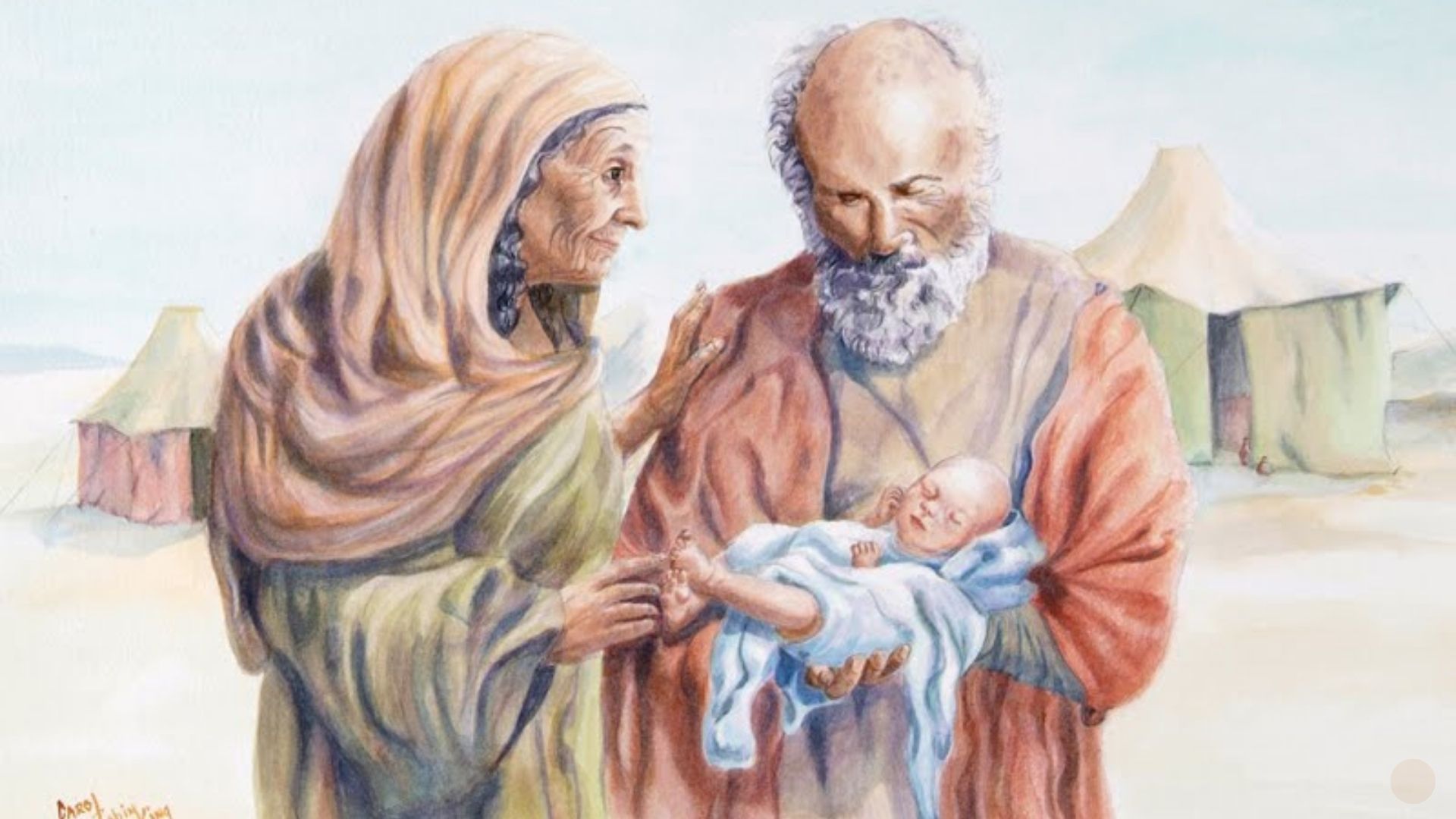
When Scripture says, “The Lord visited Sarah,” it means God stepped into her timeline. He interrupted what looked natural with what was supernatural. Sarah was old, barren, disappointed, and long past the season of possibility, yet God visited. This shows that divine visitation is not limited by biological clocks, emotional states, or earthly timelines. When God visits, age becomes irrelevant, statistics lose meaning, and history bows to prophecy.
What makes this verse so powerful is the phrase: “as He had said… as He had spoken.” Heaven does not act randomly; it acts according to what God has spoken. God is not committed to our feelings, fears, or deadlines—He is committed to His word. Isaiah 55:11 says His word does not return void. Numbers 23:19 reminds us that God is not a man that He should lie. If God has spoken, then Heaven is obligated to fulfill it.
Sarah’s story proves that delay is not denial. She had spent years waiting, years hoping, years questioning, and years thinking she was forgotten. But God never forgot. In fact, Genesis 18:14 echoes His promise: “Is anything too hard for the Lord?” When Sarah laughed in disbelief, God did not cancel the promise—He completed it. Divine promises are not overturned by human weakness.
Genesis 21:1 reveals that God’s visitation is always connected to His previously spoken word. Abraham and Sarah had reached a point where their bodies could no longer fulfill the promise on their own. God waited until all human ability was exhausted, so no one could claim the testimony. Sometimes God delays fulfillment so the miracle cannot be credited to human strength. He lets the situation get so impossible that only His hand can complete it.
The verse also reveals the nature of God’s timing. It says, “The Lord visited Sarah,” not when she was young, not when she felt ready, not when her strength was strongest, but in the exact season appointed in Heaven. Genesis 21:2 repeats the same truth: “at the set time.” God’s promises come attached to divine timing. When the time is right, nothing can stop it. Not age. Not delay. Not doubt. Not circumstances. Not even past mistakes.
This is not only Sarah’s testimony—it is the believer’s pattern. Whenever God “visits,” something that was dead comes alive. Whenever God “visits,” delayed promises accelerate. Whenever God “visits,” impossibility becomes a stage for divine performance. Hannah experienced visitation in 1 Samuel 2:21. Zechariah and Elizabeth experienced it in Luke 1:57. Mary experienced it when the angel said, “For with God nothing shall be impossible.” (Luke 1:37)
Genesis 21:1 also teaches us that prophecy has a memory. God remembers what you forgot, completes what you abandoned, and fulfills what you thought expired. The promise spoken over your life has not died—it is waiting for Genesis 21:1. In Sarah’s story, God did not give a new word; He fulfilled the old one. Some of the promises God will fulfill in your life will not be new—they will be the ones you cried over in past seasons.
Another hidden revelation is that Sarah’s visitation was connected to her alignment with God’s plan. In Genesis 18:10, the promise was spoken in the atmosphere of Abraham’s hospitality. When divine alignment meets divine timing, visitation follows. Sometimes the promise manifests when your heart posture aligns with God’s purpose.
Genesis 21:1 also reveals the mercy of God. Sarah doubted, laughed, argued, and even tried to “help God” through Hagar, yet God still fulfilled His word. This shows that God’s faithfulness is stronger than our inconsistencies. He doesn’t bless you because you are flawless—He blesses because He is faithful. He doesn’t fulfill the promise because you are perfect—He fulfills it because His word is perfect.
Sarah’s visitation birthed more than a child; it birthed a legacy. Isaac became the lineage through which Christ came. Your visitation is bigger than you—it is connected to generations. When God fulfills His promise, it doesn’t end with you; it begins with you. The miracle you receive may be the foundation of breakthroughs for your children, your family, and your spiritual lineage.
Genesis 21:1 stands as a declaration that what God has spoken will come to pass. It is an anchor for those waiting, a reminder for those weary, and a prophecy for those discouraged. When God visits, everything shifts. When God visits, delay breaks. When God visits, laughter replaces tears—just like Sarah named her son Isaac, meaning “laughter.” What once made her laugh in disbelief eventually made her laugh in joy.
If you are in a waiting season, hold onto this verse. Do not measure God’s promise by your calendar. Do not judge your future by your present. Do not let delay redefine what God has declared. He visited Sarah “as He had said.” He will visit you as He has promised.
The Red Sea opened “as God had said.”
Hannah conceived “as God had promised.”
Mary carried Christ “according to God’s word.”
Your story will shift by the same pattern—as God has spoken.
Genesis 21:1 is your reminder that God never forgets. And when your set time comes, nothing can stop your visitation.