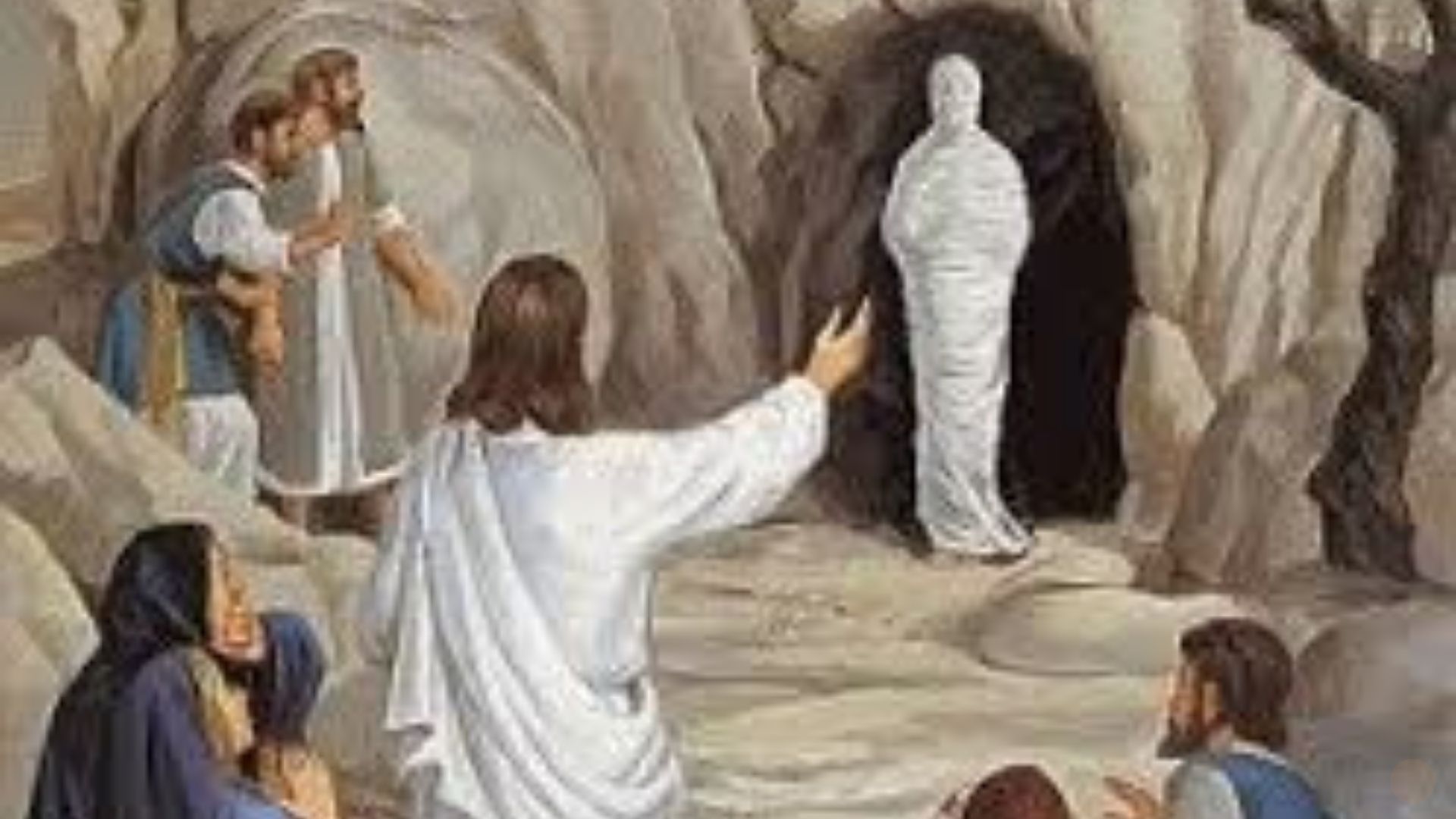
The 4-Day Miracle (Lazarus & Jesus) — The Midnight Miracle
The miracle of Lazarus is not just a resurrection story; it is a revelation of timing, authority, delay, and divine intent. It is the kind of miracle that happens when hope has expired, when logic has concluded, and when faith has been buried under finality. This is why the Bible is intentional to say Lazarus was four days dead. Not two. Not three. Four. The miracle was deliberately positioned beyond debate.
John 11:17 tells us plainly that Lazarus had already been in the tomb four days when Jesus arrived. In Jewish understanding, it was believed that the soul hovered near the body for three days. On the fourth day, corruption was considered final. Martha’s words confirm this when she says, “Lord, by this time there is a stench” (John 11:39). The miracle of Lazarus was not delayed by accident; it was scheduled to confront hopelessness at its strongest point.
This is why we call it the midnight miracle. Midnight in Scripture represents the end of human expectation and the beginning of divine intervention. It is the moment when nothing more can be done by human hands. Exodus 12 shows deliverance happening at midnight. Acts 16 shows prison doors opening at midnight. Matthew 25 shows the bridegroom arriving at midnight. Midnight is not darkness—it is transition.
Jesus intentionally stayed away when He heard Lazarus was sick. This is one of the hardest revelations for believers to accept. John 11:6 says, “So, when He heard that he was sick, He stayed two more days in the place where He was.” Love delayed. Power waited. Why? Because this miracle was not about healing—it was about resurrection authority. Healing works where life exists. Resurrection works where life has ended.
Jesus said, “This sickness is not unto death, but for the glory of God” (John 11:4). Death still happened, but it did not have the final word. This reveals a critical truth: what looks like contradiction may be part of a higher script. God may allow what He intends to overturn, because the greater revelation requires a deeper crisis.
The four-day gap also reveals the collapse of human faith. By the time Jesus arrived, prayers had stopped, hope had faded, and people were mourning, not believing. This is important. Many miracles in Scripture respond to faith, but this one creates faith. Jesus did not come because people believed; He came so that people would believe (John 11:15). This is mercy at its highest level.
Martha’s interaction with Jesus reveals religious faith without present revelation. She says, “I know that he will rise again in the resurrection at the last day” (John 11:24). Jesus responds with one of the deepest declarations in Scripture: “I am the resurrection and the life” (John 11:25). Not I will resurrect. Not I can resurrect. I am. Resurrection is not an event—it is a Person. When Jesus arrives, the future steps into the present.
The midnight miracle teaches us that delay does not mean denial; it means distinction. Jesus could have healed Lazarus earlier, but that would have produced gratitude. Resurrection produced revelation. After this miracle, many believed—but the religious leaders also decided Jesus must die (John 11:45–53). Resurrection authority threatens systems that depend on death remaining final.
Another deep revelation lies in the stone. Jesus told them, “Take away the stone.” He could raise the dead, but He asked humans to remove the obstacle. This shows that divine power and human obedience often cooperate. God will not always move what we are instructed to move. The stone represented fear, finality, and smell. Before resurrection manifests, God confronts what we have sealed off emotionally.
Martha resisted. She reminded Jesus of decay. This is human logic trying to negotiate with divine authority. Many believers do the same—quoting facts to God as if facts can overrule power. But Jesus replied, “Did I not say to you that if you would believe you would see the glory of God?” (John 11:40). Belief does not deny reality; it submits reality to God’s word.
When Jesus prayed, He did not shout. He did not wrestle. He thanked the Father. “Father, I thank You that You have heard Me” (John 11:41). Authority does not beg. Authority thanks. This prayer reveals that the miracle was already settled in heaven. What remained was manifestation on earth. The miracle was not uncertain; it was pending visibility.
Then came the command: “Lazarus, come forth!” Jesus called Lazarus by name because resurrection power without precision would have emptied every grave. This shows the intentionality of divine authority. God does not restore randomly. He calls specifically. What He names responds.
Lazarus came out bound. Alive, but restricted. Jesus then said, “Loose him, and let him go.” Resurrection restored life; process restored function. This teaches us that some people are alive but still bound by habits, fear, trauma, or limitation. Resurrection is instant. Freedom may be progressive. God raises; community helps unwrap.
The midnight miracle also reveals that God’s greatest works often happen after public mourning. Jesus wept, but He did not wail. His tears showed compassion, not hopelessness. God is not offended by grief—but He does not bow to it. Psalm 30:5 says weeping may endure for a night, but joy comes in the morning. Lazarus’ miracle happened while it was still night—because God does not wait for daylight to act.
Prophetically, Lazarus represents destinies declared dead. Ministries written off. Callings buried. Promises sealed. Dreams decomposing. The four days represent time beyond recovery, when people say, “It’s too late.” But Jesus specializes in too-late moments. Revelation 1:18 says He holds the keys of death and the grave. Keys mean access. No tomb is beyond His reach.
This miracle also foreshadows Christ’s own resurrection. Lazarus came back to life and would die again. Jesus rose never to die again. Lazarus was raised by command; Jesus rose by authority. The miracle pointed forward to a greater victory—showing that death itself was already under notice.
The midnight miracle teaches us this unshakable truth:
God is not intimidated by time.
He is not limited by decay.
He is not pressured by public opinion.
When Jesus arrives,
finality is challenged,
hopelessness is interrupted,
and impossibility is redefined.
If you are in a four-day situation—
where prayers feel late,
hope smells like decay,
and people have moved on—
hear this revelation:
Jesus does His best work when everyone else has given up.
Midnight is not your end.
It is your turning point.
And when He calls your name,
what was buried will respond.