The Hosanna Miracle: When a Cry Becomes a Throne for God’s Power
There are moments in Scripture where a single word carries the weight of heaven’s intention. “Hosanna” is one of those words. It is not merely a shout from a crowd or a religious chant repeated through generations. It is a spiritual language—a coded expression of desperation, faith, recognition, and surrender all wrapped into one utterance. The Hosanna Miracle is not just what happened when Jesus entered Jerusalem; it is a revelation of how heaven responds when a man aligns his cry with divine timing.
The origin of this word reveals its depth. In Psalm 118:25–26, the psalmist cries, “Save now, I beseech thee, O Lord… Blessed be he that cometh in the name of the Lord.” This was not poetry—it was prophecy. It carried within it a future moment when salvation would not just be requested, but revealed in a person.
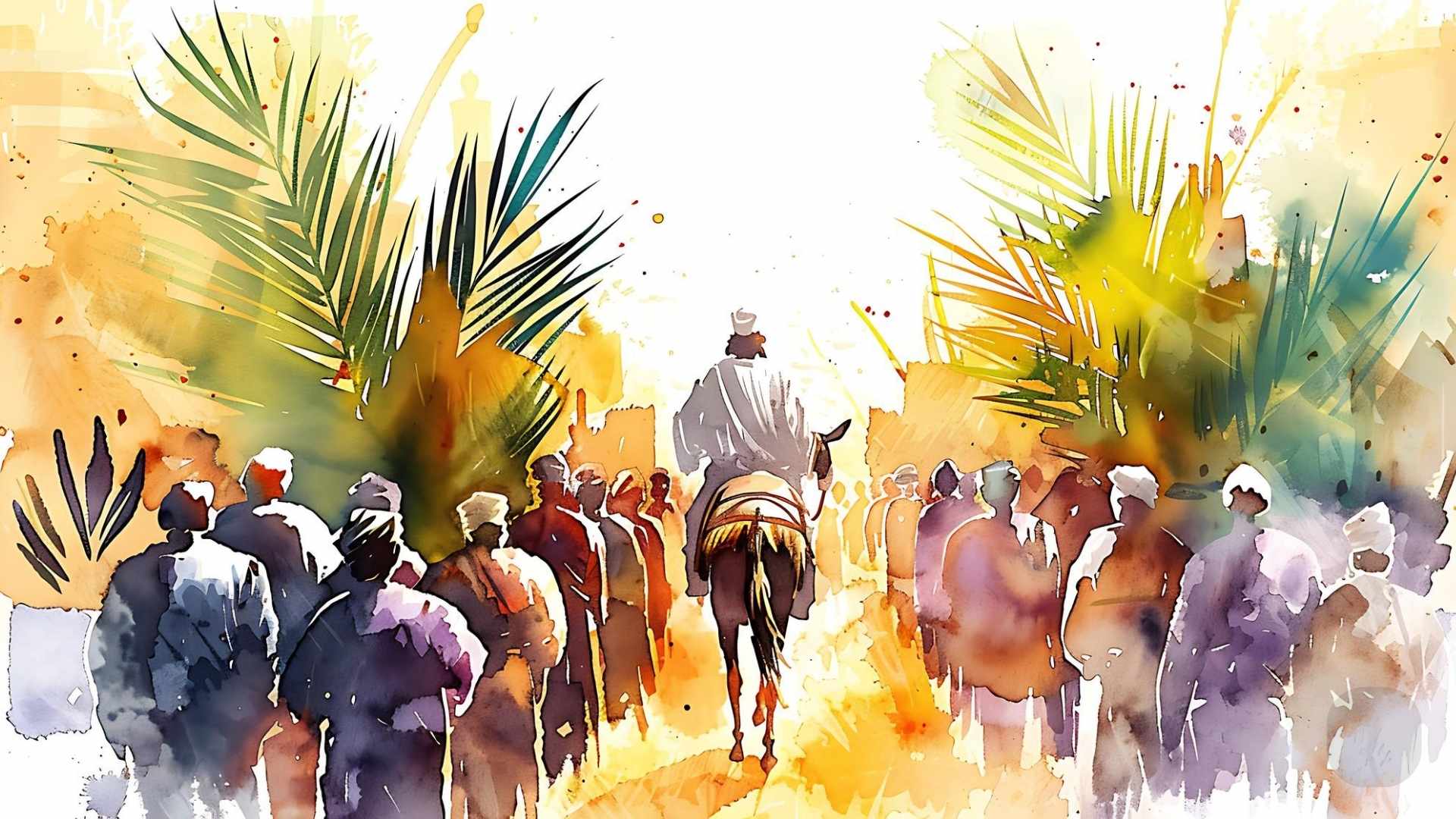
That moment came when Jesus entered Jerusalem.
“And the multitudes that went before, and that followed, cried, saying, Hosanna to the Son of David: Blessed is he that cometh in the name of the Lord; Hosanna in the highest” (Matthew 21:9).
This was more than celebration. It was recognition. The people may not have fully understood the weight of what they were saying, but in the spirit, they were announcing the arrival of divine intervention. They were declaring that the One with authority to save, deliver, and restore had stepped into their atmosphere.
And something shifted.
Scripture reveals that immediately after this declaration, Jesus entered the temple and overturned tables—disrupting systems that had corrupted sacred space (Matthew 21:12). Then, without delay, “the blind and the lame came to him in the temple; and he healed them” (Matthew 21:14).
This sequence is deeply prophetic. When Hosanna is released with understanding, it does not just invite God’s presence—it confronts what is out of alignment and establishes what is divine. It tears down what should not stand and activates what has been waiting.
The Hosanna Miracle is, therefore, not just about receiving something from God. It is about creating an atmosphere where God can express Himself fully. Scripture says, “God inhabiteth the praises of Israel” (Psalm 22:3). This means that praise is not passive—it is an invitation. It is a spiritual environment where heaven finds expression on earth.
Yet, not all cries carry the same weight.
The cry of blind Bartimaeus reveals the true essence of Hosanna. Though he did not use the exact word, the spirit of his cry was identical. “And when he heard that it was Jesus of Nazareth, he began to cry out, and say, Jesus, thou Son of David, have mercy on me” (Mark 10:47).
That phrase—“Son of David”—was not casual. It was prophetic recognition. It acknowledged Jesus as the promised King. And Scripture says that despite being rebuked, “he cried the more a great deal” (Mark 10:48).
Something about that cry stopped Jesus.
In a crowd full of voices, one voice carried alignment. One voice carried revelation. One voice carried urgency and faith. And the Bible records a powerful moment: “And Jesus stood still…” (Mark 10:49).
This is the mystery of the Hosanna dimension. When your cry is aligned, it can make heaven pause.
There is a dimension of prayer that goes beyond routine. It is not about length or repetition. It is about alignment. Scripture says, “The effectual fervent prayer of a righteous man availeth much” (James 5:16). That word “fervent” speaks of intensity, of something alive, something burning.
Hosanna is that kind of prayer.
It is not quiet resignation. It is not passive hope. It is a living cry—charged with expectation.
There is also something deeply prophetic about timing. The people cried “Hosanna” before Jesus performed miracles in that city. This reveals that Hosanna is not a response to results—it is a response to revelation. It is rooted in knowing who God is, not just what He has done.
This aligns with Hebrews 11:6, which declares, “He that cometh to God must believe that he is, and that he is a rewarder of them that diligently seek him.” Before the reward, there must be recognition. Before manifestation, there must be belief.
Hosanna operates in that space.
It declares before evidence. It believes before manifestation. It praises before results.
And in doing so, it creates a pathway for those results to appear.
There is a tension within Hosanna that must be understood. It is both a cry and a praise. It is desperation and confidence in one breath. It is the sound of someone who knows they cannot help themselves, yet refuses to accept defeat.
Scripture captures this tension in 2 Corinthians 6:2: “Behold, now is the accepted time; behold, now is the day of salvation.” Hosanna is the language of “now.” It refuses delay. It reaches into the immediacy of God’s power.
Many believers live in “eventually,” but Hosanna pulls on “now.”
It is the difference between hoping God will move and engaging Him as One who is ready to move.
Yet, there is also a sobering layer to this revelation. The same crowd that shouted Hosanna later cried, “Crucify him” (Matthew 27:22–23). This reveals that not all praise is rooted in conviction. Some is emotional, driven by expectation rather than understanding.
The Hosanna Miracle is not just about a moment—it is about a posture.
It is about sustaining recognition even when circumstances shift.
It is about remaining anchored in who God is, even when what you expected has not yet manifested.
For the believer, the invitation is clear. Move beyond routine. Engage God with sincerity. Let your cry carry weight. Let your faith be alive. Let your recognition be accurate.
Scripture assures us, “Call unto me, and I will answer thee, and shew thee great and mighty things, which thou knowest not” (Jeremiah 33:3). This is the promise behind Hosanna. It is not an empty cry—it is a call that heaven responds to.
And perhaps this is the greatest revelation of all: Hosanna is not just a word—it is a doorway.
It is the meeting point between human limitation and divine intervention.
It is the sound that signals a shift.
And when it rises from a heart that understands, it does not echo into silence—it opens the heavens.
This is the Hosanna Miracle.