What the Three Wise Men’s Gifts Reveal About Jesus
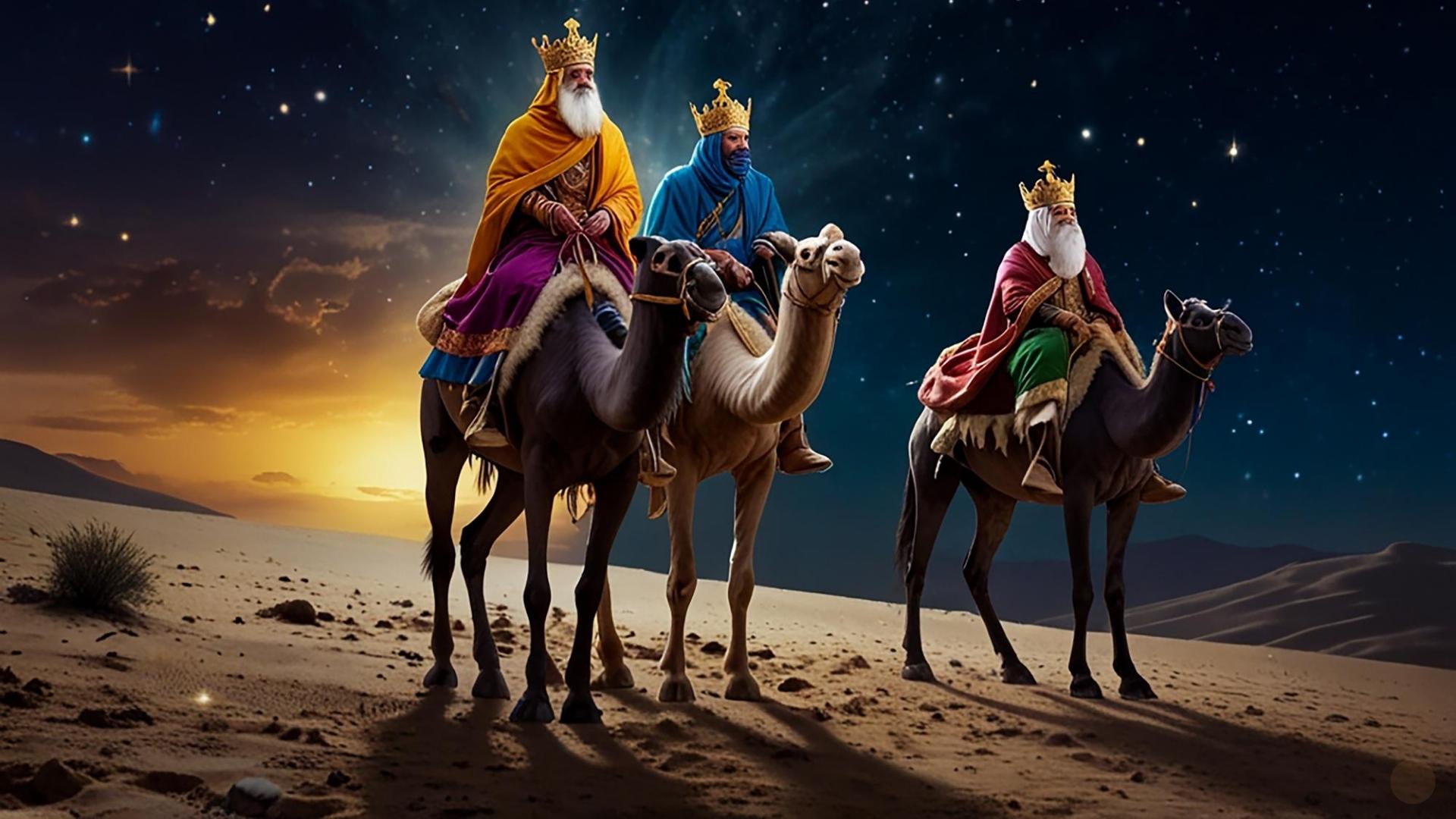
When the wise men arrived in Bethlehem, they did not come empty-handed. Matthew 2:11 records that they “fell down and worshiped Him. And when they had opened their treasures, they presented gifts to Him: gold, frankincense, and myrrh.” These were not random or culturally polite gifts. They were prophetic revelations wrapped in material form. Each gift declared something eternal about who Jesus is, what He came to do, and how His life would unfold.
The wise men may not have fully understood the depth of what they were giving, but heaven did. Their gifts preached a sermon long before Jesus ever spoke publicly.
Gold — Jesus the King
Gold has always been associated with royalty, kingship, and authority. In ancient times, gold was the currency of kings, used in palaces, crowns, and temples. By offering gold, the wise men were declaring that Jesus was not merely a child, a teacher, or a prophet—He was a King.
This fulfilled Old Testament prophecy. Isaiah 9:6 says, “For unto us a Child is born… and the government will be upon His shoulder.” Psalm 72, a messianic psalm, speaks of kings bringing gifts and gold to the promised ruler. The wise men, coming from the East, recognized what many in Israel missed: Jesus was born a King, even though He lay in a manger.
Gold reveals that Jesus came with authority, not borrowed but inherent. He did not grow into kingship; He was born into it. Even as a baby, heaven acknowledged His reign. This is why later in His ministry Jesus could say, “All authority has been given to Me in heaven and on earth” (Matthew 28:18). The gold points to Christ’s sovereign rule—not only over Israel, but over all nations.
Yet there is a paradox here. The King of kings did not arrive in a palace but in poverty. This shows us that God’s kingdom does not depend on outward display. Jesus’ authority was not cosmetic; it was divine. Gold proclaims Jesus as King, but His throne would be a cross before it was a crown.
Frankincense — Jesus the Priest
Frankincense was a costly, fragrant resin used primarily in worship. In the Old Testament, it was burned in the temple as part of the priestly ministry before God (Exodus 30:34–38). It symbolized prayer, intercession, and communion with God. By offering frankincense, the wise men were declaring that Jesus was a Priest, not in the Levitical order, but in a higher, eternal one.
Hebrews 4:14 calls Jesus “a great High Priest who has passed through the heavens.” Unlike earthly priests, Jesus would not merely offer sacrifices—He would be the mediator between God and humanity. Frankincense reveals that Jesus’ life would be marked by worship, prayer, and divine intimacy. Even as a child, His destiny was priestly.
This gift also points to Jesus’ divinity. Frankincense was offered to God, not to ordinary men. By giving it to Jesus, the wise men acknowledged—perhaps more than they realized—that this child was worthy of worship. This aligns with John 1:14, “The Word became flesh and dwelt among us.” Frankincense declares that Jesus is God with us, bridging heaven and earth.
Later, Jesus would embody this priestly role fully. He would pray for His disciples, intercede for sinners, and ultimately stand as the eternal mediator. Romans 8:34 says He is now at the right hand of God, “also making intercession for us.” Frankincense points to a life that connects humanity back to God.
Myrrh — Jesus the Sacrifice
Myrrh is the most sobering of the three gifts. It was used for embalming and burial. John 19:39 records that myrrh was brought to prepare Jesus’ body after His crucifixion. By presenting myrrh at His birth, the wise men prophetically acknowledged that Jesus was born to die.
This gift reveals the suffering mission of Christ. Isaiah 53:5 foretold it clearly: “He was wounded for our transgressions, He was bruised for our iniquities.” Jesus did not come merely to teach morals or inspire change—He came to offer His life as a ransom. Myrrh points to the cross hidden in the cradle.
It is striking that at the moment of celebration—when a Savior is born—death is already foreshadowed. This teaches us that redemption was not an afterthought. From the beginning, Jesus’ life was oriented toward sacrifice. Philippians 2:8 says He “humbled Himself and became obedient to the point of death, even the death of the cross.”
Myrrh reveals Jesus as the Lamb of God. John the Baptist would later declare, “Behold! The Lamb of God who takes away the sin of the world” (John 1:29). The wise men’s gift silently preached this truth years before it was spoken aloud.
The Complete Revelation: King, Priest, and Sacrifice
Taken together, the three gifts reveal the full identity and mission of Jesus.
Gold declares Him King—He rules.
Frankincense declares Him Priest—He reconciles.
Myrrh declares Him Sacrifice—He redeems.
These are not separate roles; they are one unified calling. Jesus is the King who rules with humility, the Priest who intercedes with compassion, and the Sacrifice who saves through suffering. No other figure in history fulfills all three roles perfectly.
This tri-fold revelation also mirrors the Old Testament offices of prophet, priest, and king—yet Jesus transcends them all. He does not merely hold an office; He fulfills it completely. Hebrews 7:27 says He offered Himself “once for all.” That is finality. That is fulfillment.
A Final Insight
The wise men gave treasures, but Jesus gave Himself. Their gifts revealed who He was, but His life revealed what God is like. The gold would eventually be spent, the frankincense burned, and the myrrh used—but the truth they pointed to remains eternal.
The gifts of the wise men remind us that Jesus cannot be reduced to one dimension. He is not only Savior; He is Lord. Not only compassionate; He is holy. Not only born to live; He was born to die—and to rise again.
And just as the wise men opened their treasures before Him, the story invites us to do the same. To bring not gold or incense, but hearts surrendered. Because the greatest revelation of the gifts is this: Jesus is worthy of everything.